How it works
From plans to as-built on a new home pad.
Four steps: review plans and geotech, lock a layout and quote with the engineer of record, install and log torque, then hand over the as-built for engineering and inspection.
Plans and geotech
Share structural plans and any geotechnical report. We review reactions, flood zone notes, and access. A visit is not a design and not a substitute for the engineer of record.
Layout and quote
We coordinate a pile layout with the engineer of record and provide a fixed-price proposal for installation. Torque targets and stop criteria belong to that design.
Install and torque logs
A hydraulic drive head rotates each pile. Depth and torque are recorded. Caps or brackets are set as designed. Weather, tides, and obstructions can change the schedule.
As-built for engineer and inspector
You receive an as-built pile plan and torque log to hand to the engineer of record and the inspector. Sign-off remains with those parties.

What gets recorded
Each pile’s identity, depth, and installation torque are written down while the shaft turns. Torque may support a capacity check when the engineer accepts a correlation for that shaft, helix, and soil. Without that correlation, the number is still worth keeping — it is not the design.
Hot-dip galvanizing to ASTM A123 is the coastal default we plan around unless the engineer specifies another coating or section. Orientation (plumb or battered) is per pier, as designed.
Sample record sheets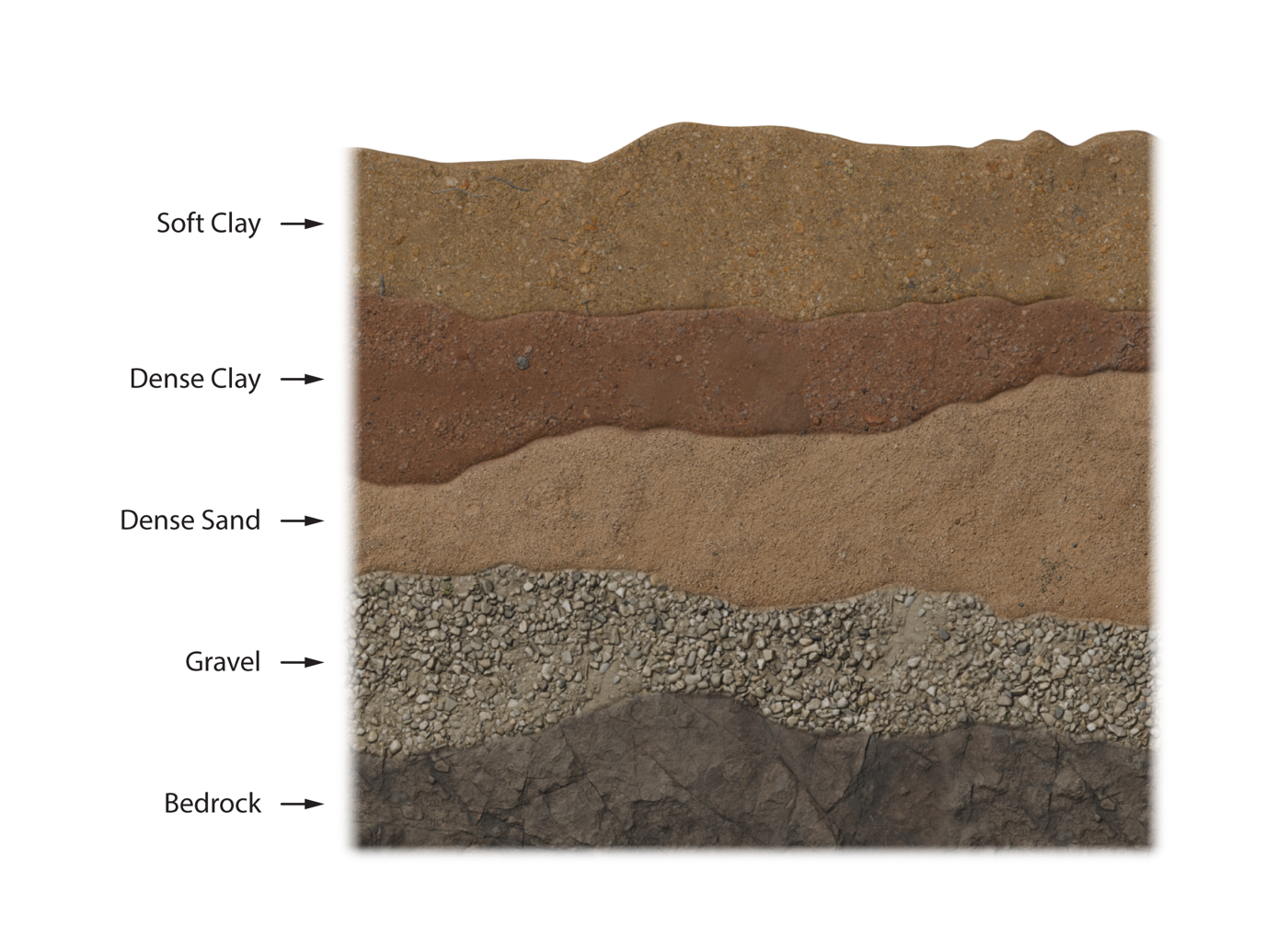
Coastal layers are not a formula
General soil-layer diagram. Coastal sites often include loose sand, organics, and a high water table. Not a boring.
Lots near North Myrtle Beach often include loose sand, organic silt, and a high water table. Bedrock is rarely the target. The engineer decides what competent bearing means for each pile’s load.